American History Guided Notes: with digital graphic organizers

The hardest part of a lecture day in a history class is keeping every student with you while you cover a lot of content. Guided notes fixed that. Students fill in the key ideas as you go through the PowerPoint, and they walk out with an organized set of notes they can actually study from.

This bundle runs from the Western Frontier through current events, with student pages, teacher pages, PowerPoints and digital graphic organizers for each unit. It works for middle and high school American History classes, in print or online.


American History Guided Notes & PowerPoints BUNDLE, US History, Print, Digital 

American history guided notes and PowerPoint lessons with digital graphic organizers
These interactive guided notes and PowerPoints are great for the teacher input section of the lesson. Students can use these notes to complete assignments, as study guides, and to guide them through activity in the classroom and at home. 

Also part of AMERICAN HISTORY MEGA Bundle
American history guided notes and PowerPoint lessons with digital graphic organizersAmerican history guided notes and PowerPoint lessons with digital graphic organizersAmerican history guided notes and PowerPoint lessons with digital graphic organizers

American History Guided Notes & PowerPoints BUNDLE, US History, Print, Digital 


Why guided notes work

WHY USE GUIDED NOTES WITH SECONDARY STUDENTS? 
  • Enhanced Learning: Guided notes provide a structured framework for students to organize and record key information during lessons or lectures. This active engagement helps students stay focused, process information more effectively, and retain knowledge.
  • Improved Comprehension: Guided notes guide students in identifying and highlighting important concepts, main ideas, and supporting details. By focusing on essential information, students develop a better understanding of the subject matter and its significance.
  • Note-Taking Skills: Guided notes help students develop effective note-taking skills, such as summarizing, paraphrasing, and identifying key details. These skills are essential for academic success, as they support comprehension, critical thinking, and information recall.
  • Accessibility and Differentiation: Guided notes can be pre-prepared or provided to students with learning differences or disabilities, ensuring equal access to information. They can be modified to suit individual needs, providing differentiated support and scaffolding for students who may require additional assistance.
  • Study and Review Tool: Guided notes serve as a valuable study aid and review resource. Students can revisit their notes to reinforce understanding, review important concepts, and prepare for assessments. The organized format makes it easier to locate and review specific information.
  • Active Engagement: Guided notes encourage active participation during lessons. Students are actively listening, processing information, and making connections as they fill in the missing information or complete prompts. This promotes deeper engagement with the content and facilitates critical thinking.
  • Increased Accountability: By providing students with a structured note-taking format, guided notes promote accountability. Students are responsible for actively participating in the note-taking process, ensuring they remain attentive and engaged during instruction.

Guided notes offer a range of benefits for secondary students. They support learning, comprehension, note-taking skills, accessibility, and serve as effective study and review tools. By using guided notes, educators can foster a more interactive and inclusive learning environment, promoting student success and achievement.

What's inside

INCLUDED: 

American History Guided Notes & PowerPoints BUNDLE, US History, Print, Digital 


How I use it

HOW TO USE: 
  • Guided Notes- To keep notes organized and to ensure students are following along during teacher input section of the lesson. 
  • Activities- Embedded activities within each unit to keep student engaged (can be used in class or as their daily homework). 
  • Reflection Questions- Reflection questions to get students thinking about the application of the new material. 
  • Unit Background- Print and have student follow along for short class discussion daily. This will keep student engaged and they will leave with an organized set of notes 
  • Interactive Notebook Inserts- Print 2 to a page to paste into interactive notebooks as a reference sheet
  • Study Guide- Have student highlight and use to guide studying for unit test
  • State Test Review Pull out and use as a guide for state test prep at the end of the year.
  • AP Exam Overview- Pull out and use as a guide for AP exam review. 
  • Research Guide- Use notes to complete activities and reference key ideas and events when researching
  • Graphic Organizers- Use graphic organizer inserts to reflect and apply knowledge and skills learned. Use activities built in as class activities or homework review. 
  • Homework Questions- Questions students answer straight from their notes to ensure they took good notes and review them nightly.  
American history guided notes and PowerPoint lessons with digital graphic organizersAmerican history guided notes and PowerPoint lessons with digital graphic organizersAmerican history guided notes and PowerPoint lessons with digital graphic organizers
American history guided notes and PowerPoint lessons with digital graphic organizers

A tip from my classroom

Don't hand out the whole unit packet on day one. Give students only the pages for that day's lesson and have them add each set to a folder or notebook as you go. By test day they have the full unit in order, and nobody has lost the packet in week one. The homework questions at the end make a quick check the next morning to see who really took the notes.

Find guided notes for every subject I teach in this guide.

See every guided notes and PowerPoint resource in my shop: browse the collection.


Find a year-long curriculum designed for middle and high school classrooms.

More Resources from Learned Lessons Teaching Materials
✔ Guided Notes & PowerPoints
✔ Bell Ringers & Warm-Ups
✔ Escape Rooms
✔ Word Walls
✔ Choice Boards
✔ Collaborative Posters
✔ DBQs
✔ Mapping Activities
✔ Assessments
✔ Digital Google Classroom Resources

Stay Connected
🛍️ Shop TpT or 🛍️ Memberships Site
✉️ Email Updates
📸 Instagram
📌 Pinterest
📘 Facebook
🎵 TikTok
📝 Blog
✉️ learnedlessonstpt@gmail.com

Teaching Made Easier.
Learning Made Meaningful.

Print • Digital • Google Classroom • No Prep

Learned Lessons Teaching Materials for secondary teachers
Civics Assessments: use tests to guide instruction

A test grade by itself doesn't tell you much. As a teacher and later as a principal, I always looked at what happened the day after a quiz, because that is where the real value is. These civics and government tests and quizzes come with answer keys and a Google Form link, so you can see quickly which concepts need reteaching and which students are ready to move on.

Civics and government quizzes and assessments to guide classroom instruction


How to use Civics assessments to guide instruction: 

Six steps for using the results

Using civics and government assessments to guide instruction can help teachers identify areas where their students need more support and help them tailor their lessons to meet those needs. Here are some steps teachers can follow:
  • Determine the learning goals: Teachers should begin by identifying the learning goals they want their students to achieve. This will help them choose the appropriate assessment to measure students' progress towards those goals.
  • Choose the appropriate assessment: There are a variety of civics and government assessments available, including multiple choice tests, essay prompts, and performance tasks. Teachers should choose the assessment that best aligns with their learning goals and the needs of their students.
  • Administer the assessment: Once the assessment is chosen, teachers should administer it to their students. This can be done in a variety of ways, including paper and pencil, online, or through a classroom discussion.
  • Analyze the results: After students have completed the assessment, teachers should analyze the results to identify areas where students may be struggling. This analysis can be done by looking at individual student scores, as well as class-wide data.
  • Tailor instruction to meet student needs: Using the results of the assessment, teachers can tailor their instruction to meet the needs of their students. This may include providing additional support to struggling students, reteaching certain concepts, or providing enrichment opportunities for students who have already mastered the material.
  • Monitor progress: As instruction is tailored to meet student needs, teachers should continue to monitor their students' progress through additional assessments or classroom observations. This will help them to gauge whether their instruction is effective and make any necessary adjustments.
By following these steps, teachers can use civics and government assessments to guide their instruction and ensure that their students are making progress towards their learning goals.

Also part of CIVICS and GOVERNMENT MEGA BUNDLE 

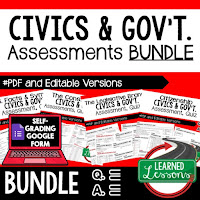
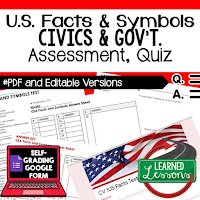
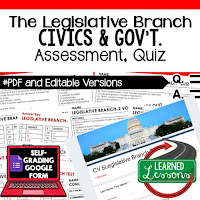
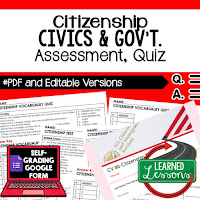
Civics and government quizzes and assessments to guide classroom instructionCivics and government quizzes and assessments to guide classroom instructionCivics and government quizzes and assessments to guide classroom instructionCivics and government quizzes and assessments to guide classroom instructionCivics and government quizzes and assessments to guide classroom instructionCivics and government quizzes and assessments to guide classroom instructionCivics and government quizzes and assessments to guide classroom instructionCivics and government quizzes and assessments to guide classroom instructionCivics and government quizzes and assessments to guide classroom instructionCivics and government quizzes and assessments to guide classroom instructionCivics and government quizzes and assessments to guide classroom instructionCivics and government quizzes and assessments to guide classroom instructionCivics and government quizzes and assessments to guide classroom instructionCivics and government quizzes and assessments to guide classroom instructionCivics and government quizzes and assessments to guide classroom instructionCivics and government quizzes and assessments to guide classroom instructionCivics and government quizzes and assessments to guide classroom instructionCivics and government quizzes and assessments to guide classroom instruction


What's inside

INCLUDED: 

A tip from my classroom

After a quiz, sort the questions, not the students. Find the two or three questions most of the class missed and open the next class by reteaching just those. Then give a short exit ticket on the same skills so you know the reteach worked before you move to the next unit.

See every assessment and quiz resource in my shop: browse the collection.


Find a year-long curriculum designed for middle and high school classrooms.

More Resources from Learned Lessons Teaching Materials
✔ Guided Notes & PowerPoints
✔ Bell Ringers & Warm-Ups
✔ Escape Rooms
✔ Word Walls
✔ Choice Boards
✔ Collaborative Posters
✔ DBQs
✔ Mapping Activities
✔ Assessments
✔ Digital Google Classroom Resources

Stay Connected
🛍️ Shop TpT or 🛍️ Memberships Site
✉️ Email Updates
📸 Instagram
📌 Pinterest
📘 Facebook
🎵 TikTok
📝 Blog
✉️ learnedlessonstpt@gmail.com

Teaching Made Easier.
Learning Made Meaningful.

Print • Digital • Google Classroom • No Prep

Learned Lessons Teaching Materials for secondary teachers
Blended Learning: boost motivation and achievement

Going digital doesn't have to mean throwing out everything that already works in your classroom. When I started mixing paper and technology, I learned a few things the hard way, and the biggest one was that the lesson has to come first. This post walks through how to start at your own comfort level, what to check before you assign digital work, and how to keep students safe online.


Blended Learning
Blended Learning: Digital and Paper Resources for the Secondary Classroom


What is Blended Learning: 
Blended LEARNING is student centered instruction that has student working with quality instructional materials in both a mix of paper-based activities, hands on activities, and technology integrated activities.  Technology integration should be used to get to higher levels of Bloom's Taxonomy and DOK Quadrants 3 and 4. Think about using technology to appeal to students Wants, Interests, and Needs (WIN).  

Quick Tip: You need to ensure you are focusing on STUDENT learning with technology.  With that said, all use of technology should be a tool to facilitate the students mastering the learning objective.  Technology should not replace good instruction and should always come after good teaching strategies.  So, good lessons aligned to standards first and technology integration second.  

Finding COMFORT and JOY in digital learning.

Increase Student Engagement, Blended Learning, Go Paperless with Learned Lessons. 


Blended learning teaching resources for classroom and online instruction

Find some JOY in going paperless or just get out of your COMFORT zone by trying DIGITAL resources! 

Getting started, step by step

Guide to what a digital classroom looks like:
Are you contemplating stepping into the digital world?  Well, let me give you a few quick tips that I learned the hard way. 

You need to ensure you are focusing on STUDENT learning with technology, With that said, all use of technology should be a tool to facilitate the students as the work towards mastering the learning objectives.  Technology should not replace good instruction and should always come after good teaching strategies.  So, good lessons aligned to standards first, and technology integration second. 

First,  decide your current level.
►Beginner Level- Not Familiar
-Start small.Try a blended learning approach with paper and digital resources.A good start would be to use a no cost online program such as www.CommonLit.orgor ReadWorks. Both of these programs are easy to use and will allow your students an organized online platform for reading information and other test aligned to your content and to common core standards.
► Middle Level- Can Easily Get Around in a Digital World
-If you are familiar with some use of digital learning, then you probably have a google classroom set-up or can easily set one up.  I recommend using online learning for projects and activities throughout your unit.  Maybe you don’t have a device for every student in your class, but your school has computer labs and/or laptop carts available.  Also, if you have a set of iPads or other devices within your room, you could run center rotations to get projects or activities done throughout the unit. I would suggest timeline relays, puzzles, profile projects, or choice boards activities to eliminate the use of paper and to engage students in the content. Click here for ready to go digital products.  


Blended learning teaching resources for classroom and online instruction

► Advanced Level- Google Certified Level 1 or 2
-If you are ready to eliminate most paper from your room, then you are ready to go 100% digital.  You are also ready to get your kids creating new products using great digital software available.  Think about have your students create digital portfolios, making movies, coding, and creating their own blogs. 

Do your homework before you assign digital work:
Second, check the activity, make sure all links work, have a backup plan for internet outages, make sure you can monitor the students while they work (turn screens or use a program such as GoGuardian or Nearpod).

Make sure the activity aligns to the objective or standard:
Third, make sure the activity requires students to submit proof of their learning and measures the objective for the day.  
•Have a set of guided questions, a writing prompt, a graphic organizer.
•Whatever they turn in can be in a digital format or a print format using a digital resource.  This depends on how comfortable you are with the activity.
•Checkout the great American History, Civics, Geography, Science, and ELA digital products below. 

Make sure you model the expectations and explain digital safety:
Fourth, ensure students understand how to stay safe and use online content appropriately.  An easy way to do this is to send students to Scholastic’s 10 Digital Safety Commandments for Students for a fun take on digital responsibility and safety.My favorite from the site is below:
“V. Your local library is offering a PlayStation 4 to the best neighborhood poet. You   
      happened to find the most amazing Minecraft poem on the web last night. 
      Do you cut and paste the poem into a Word document?
No. Thou shalt not steal. Plagiarism is a crime!”

Keep the purpose in mind

And last, but certainly not least, remember the overall purpose of digital learning.  MIT said it best,
“Digital learning technologies can enable students to grasp concepts more quickly and fully, to connect theory and application more adeptly, and to engage in learning more readily, while also improving instructional techniques, leveraging instructor time, and facilitating the widespread sharing of knowledge. Digital technologies will enable this in new and better ways and create possibilities beyond the limits of our current imagination.” _MIT EDU

So, kick back and enjoy theComfortsof a paperless classroom with a few digital activities from Learned Lessons.  Or if you are new to digital learning, I challenge you to step out of yourComfort zone!  

How I'd use this

Pick one unit and make only one day a week digital. Use that day for a station or a project and keep the rest of the unit the way you normally teach it. After the unit, ask students what worked and what didn't, then add a second digital day next time. Small steps like this build your confidence and theirs.

Find more of my teacher and principal resources in this guide.

See every teacher professional development resource in my shop: browse the collection.


Find a year-long curriculum designed for middle and high school classrooms.

More Resources from Learned Lessons Teaching Materials
✔ Guided Notes & PowerPoints
✔ Bell Ringers & Warm-Ups
✔ Escape Rooms
✔ Word Walls
✔ Choice Boards
✔ Collaborative Posters
✔ DBQs
✔ Mapping Activities
✔ Assessments
✔ Digital Google Classroom Resources

Stay Connected
🛍️ Shop TpT or 🛍️ Memberships Site
✉️ Email Updates
📸 Instagram
📌 Pinterest
📘 Facebook
🎵 TikTok
📝 Blog
✉️ learnedlessonstpt@gmail.com

Teaching Made Easier.
Learning Made Meaningful.

Print • Digital • Google Classroom • No Prep

Learned Lessons Teaching Materials for secondary teachers
Back to Top